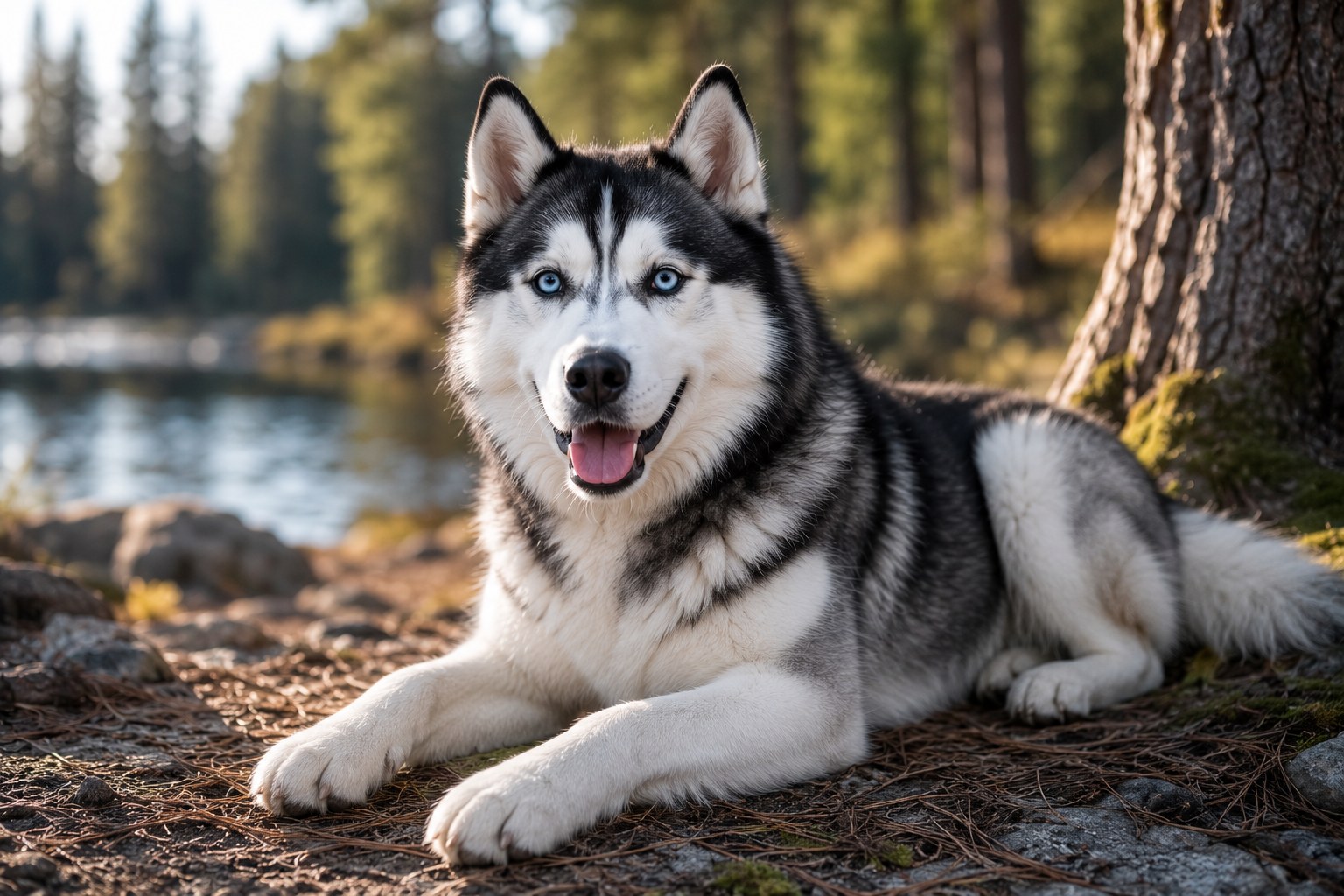
The Siberian Husky is a dog you can’t miss. Bright blue or brown eyes, a distinctive facial mask, an athletic build and a thick coat make this breed one of the most recognisable in the world. But a husky’s luxurious coat is not only about looks. It has a complex structure and an important natural job: helping the dog cope with both cold and overheating. That is why husky care has its own rules.
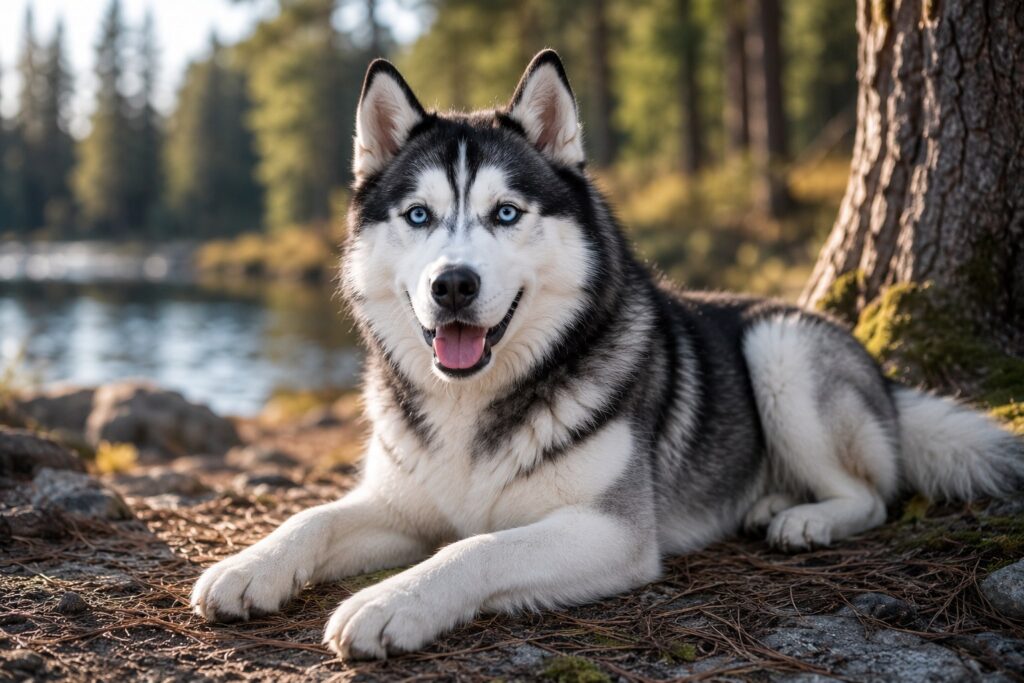
What is a husky’s coat like?
Huskies are double-coated dogs. The coat has two main layers:
- guard hair — longer and coarser;
- undercoat — dense, soft and warm.
The undercoat does much of the insulation work. So a husky’s coat is not just a “thick fur coat” you occasionally clip. It is a natural system that helps the dog adapt to different temperatures.
Huskies shed a lot
If you have ever lived with a husky, you already know the answer to “Where is all this hair coming from?” During seasonal shedding a husky can lose a huge amount of undercoat. Hair comes out in whole clumps. That is normal. But this is also when regular care matters most. Brushing removes dead undercoat before it ends up on the floor, the sofa and your clothes.
How often should you brush a husky?
In a normal period, regular brushing and coat checks are enough. During heavy shedding, increase how often you brush. Pay special attention to:
- behind the ears;
- on the neck;
- on the chest;
- on the sides;
- on the hind legs;
- near the tail.
It is not enough to skim the surface with a brush. You need to work through the undercoat — without damaging the skin.
Can you clip a husky?
This is one of the most important questions. In most cases a husky does not need a haircut. In particular, do not shave the dog “to the skin” in an attempt to help with summer heat. The double coat helps regulate temperature and protects the skin from the environment. Removing the coat without a medical or other solid reason is usually a bad idea. If the coat is badly matted or another problem appears, decide on clipping together with a professional groomer and, if needed, a veterinarian.
How does a husky cope with heat?
A fair question. If the coat is so thick, why isn’t the dog too hot? Because a double coat does not work like a simple winter jacket. It creates an insulating barrier and also helps protect the body from external heat. That does not mean huskies handle heat easily. In hot weather give your dog water, a cool place to rest, and avoid hard exercise in the hottest hours. And never leave a dog in a closed car.
Bathing a husky
Huskies usually do not need very frequent baths. If the dog is healthy and gets regular home care, over-washing is unnecessary. When bath day does come, rinse the dense coat thoroughly. Use a shampoo suited to the dog’s skin and coat. After washing, drying matters a lot. Thick coat and undercoat can stay wet inside even when the dog looks dry on top. That is why professional drying is an important part of grooming.
Why is drying a husky a separate step?
Because of the dense undercoat, a regular home dryer is often not enough. Professional equipment removes leftover moisture and dead undercoat more effectively. While drying, a groomer also checks the coat and skin. Remember: a powerful dryer is a tool that must be used correctly. Too strong an airflow or the wrong temperature can scare the dog or cause discomfort.
Can you brush a husky yourself?
Yes — and home care is essential. Owners should brush regularly and watch the coat closely during shedding. But if you do not know which tools suit your husky, or the coat is already badly matted, see a professional. The main rule: do not force out tangled coat. That can hurt the dog and injure the skin.
Should you “strip the undercoat to zero”?
No. The goal of professional brushing is not to remove all undercoat. You remove dead coat that is ready to shed and leave the dog neat. Excessive or aggressive brushing can irritate the skin. Correct technique and the right tools matter.
Husky grooming is more than the coat
In a full care session, don’t forget the rest of the dog. A groomer can also look after:
- nails;
- paws;
- hair between the pads;
- ears;
- hygiene areas;
- skin condition.
Regular hands-on contact also helps spot unusual changes. If you see wounds, strong redness, rashes or other skin issues, show them to a veterinarian.
Why you should not grab clippers yourself
A husky is not the breed to practise clipper work on. Even a “quick tidy-up” can damage coat structure or skin. Shaving because you want to make summer easier is especially risky. If you are worried about coat condition or the dog clearly struggles in heat, discuss proper care with a professional groomer and a vet.
A husky’s first grooming
It is best to introduce routines early. Gradually get a puppy used to:
- brushing;
- touch on the paws;
- ear checks;
- nail care;
- dryer noise;
- the grooming table.
The calmer the dog is about these routines, the easier later care becomes. For a large, strong breed like the husky, that really matters.
Home care + professional grooming
The best results come from combining regular home care with salon visits. The owner keeps the coat in decent shape between appointments. The groomer provides full care: a proper wash and dry, removal of excess dead undercoat and a neat finish. Professional grooming is especially useful during seasonal shedding.
A final word
The husky was built by nature for tough weather. The dense double coat is not an accident and not just decoration. So the main goal of grooming is not to change a husky’s natural coat, but to care for it properly. Regular brushing, correct bathing, quality drying and skin checks help keep your pet clean, neat and comfortable. And you do not need to shave a husky so they “won’t overheat”. It is better to care for the natural coat the right way. At Star Grooming we tailor care to each pet and coat type.