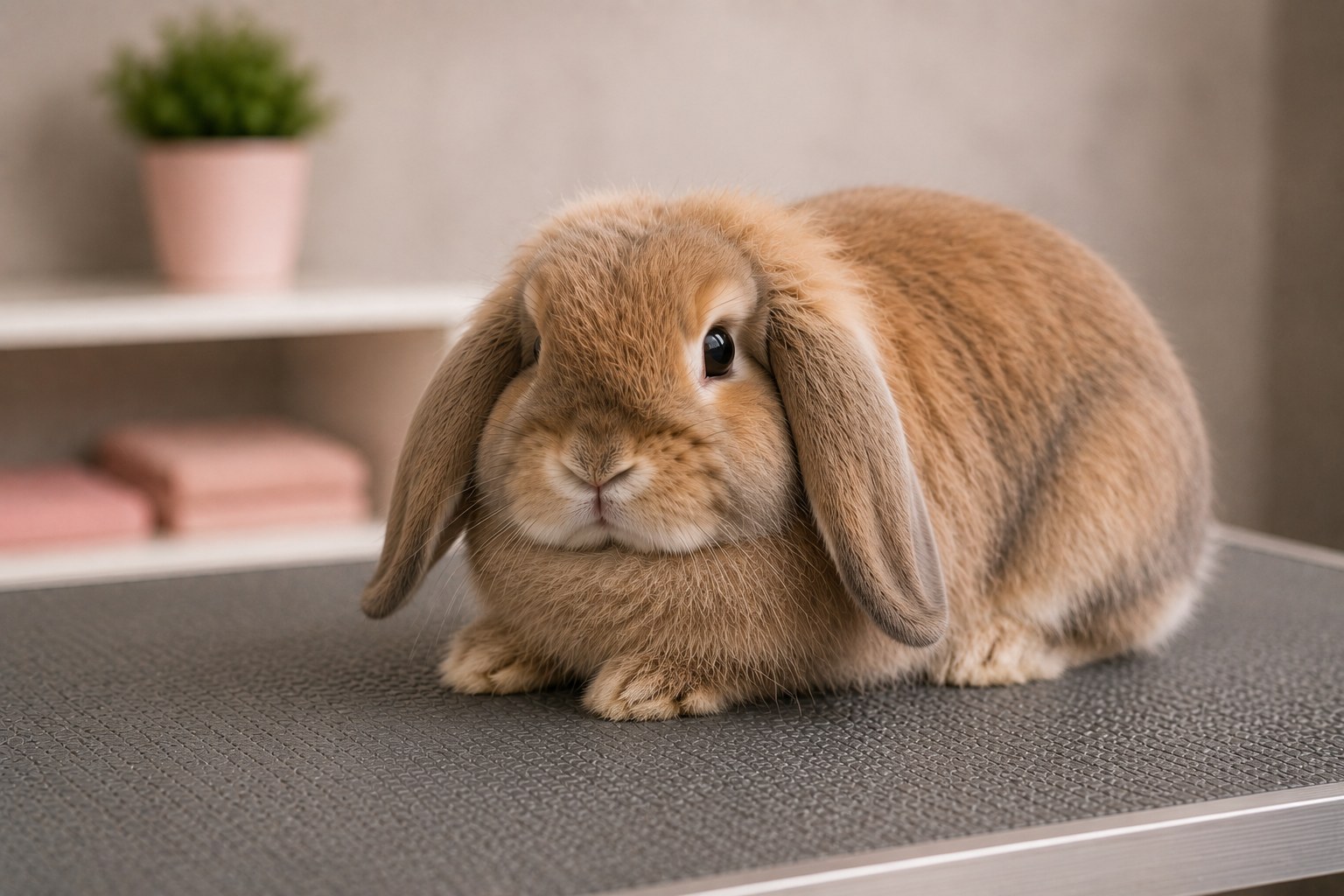
A pet rabbit is an extremely clean animal. It takes care of its own coat, washes itself, and keeps itself tidy most of the day. That does not mean it never needs human help — especially during molt, for long-haired breeds, or when the rabbit struggles to stay clean on its own. Regular grooming keeps the coat neat and helps you spot skin, nail or health issues early.
Why does a pet rabbit need grooming?
Rabbits constantly lick their fur and swallow loose hair. Unlike cats, they cannot vomit hairballs, so too much swallowed hair can cause digestive problems. That is why removing dead coat with careful brushing matters — especially during heavy molt, when self-grooming alone may not be enough.
How often should you brush a rabbit?
It depends on coat type. Short-haired rabbits usually need regular checks and brushing, with more attention in active molt. Long-haired breeds need much more care. Angoras and other long coats may need daily attention to avoid tangles and mats. Brush very gently: rabbit skin is delicate, so hard pulling or rough brushing can hurt.
Mats are not just a looks problem
If the coat starts matting, do not wait. Mats tighten, pull the skin and can hide irritation or injury. Tangling is common:
- under the chin;
- behind the ears;
- on the sides;
- on the belly;
- near the hind legs;
- around the tail.
If a mat sits close to the skin, do not try to cut it out with scissors yourself. Rabbit skin is very thin and easy to cut by accident. Large or tight mats are safer for a vet or a specialist experienced with rabbits.
Can you bathe a pet rabbit?
Important point: in normal situations a rabbit should not be bathed.
Rabbits handle water immersion poorly, can panic and thrash, risk injury, and a dense wet coat is hard to dry safely. Hypothermia is a real risk. Rabbit grooming is not like bathing a dog. A small dirty spot is usually cleaned locally. If the rear stays dirty often, do not just wash more — look for a cause (dental issues, weight, back or joint pain can block self-care). See a vet in those cases.
Nails need attention too
Indoor rabbits’ nails can grow quickly. Overlong nails catch on surfaces, break or curve into the pad. Check regularly and trim when needed — often about every 4–8 weeks, depending on the rabbit. Be careful: a blood vessel runs inside the nail. If you have never trimmed rabbit nails, ask a professional to show you the safe technique.
Grooming is also a mini health check
While brushing you can notice changes that are easy to miss day to day — skin flakes, sore spots, parasites, weight changes, or dirty areas that signal the rabbit cannot groom itself well. Early notice means earlier help.
Home care and professional help
Owners can do a lot at home: check the coat, brush gently, watch nails and cleanliness. If the coat is badly tangled, mats have formed, or you are unsure how to proceed safely, do not experiment — especially with scissors or clippers. Thin skin plus a sudden movement can mean injury.
A final word
A pet rabbit does not need complex salon sessions every week. It needs regular, calm, informed care. Brushing removes excess hair in molt. Nail care keeps walks and play comfortable. Coat checks catch problems early. A gentle approach lowers stress.
Do not treat a rabbit like a dog or a cat during grooming.
It has its own physiology and needs. At Star Grooming we believe good grooming is not “as many procedures as possible” — it is the right care for that specific pet. If you are unsure how to care for your rabbit’s coat, ask a specialist who knows this species.