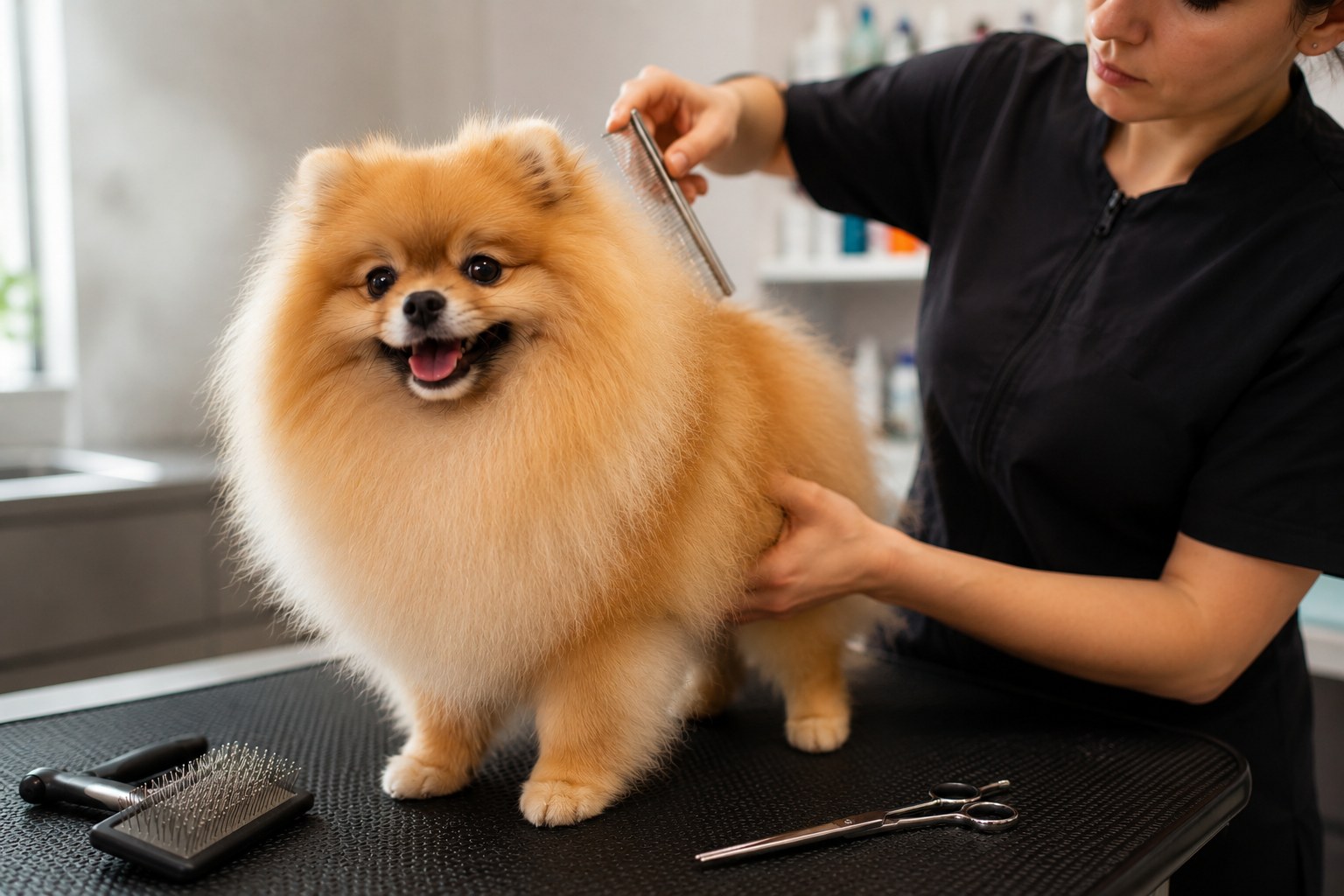
The Pomeranian is a small dog with a big personality and an incredibly fluffy coat. Dense undercoat and a signature “ruff” give the breed its recognisable look.
That fluffy beauty needs daily attention. A Spitz coat requires careful brushing, proper bathing, and professional grooming. It may seem easy to “just trim” a small Pom at home, but the wrong approach can damage the coat and make the dog uncomfortable.
What is a Pomeranian’s coat like?
A Pomeranian’s coat has a special structure: a dense undercoat plus longer guard hair.
The undercoat helps regulate body temperature; the guard hair protects the skin and shapes the breed’s silhouette.
So this is not “just a lot of fluff.” Wrong brushing or clipping can change how the coat grows and looks.
How to care for a Spitz coat at home
Home care is essential for every Pomeranian. Even with regular salon visits, you need to keep the coat in good condition between appointments.
Regular brushing
Brush often, especially where mats form first:
- behind the ears;
- on the neck and ruff;
- under the front legs;
- on the hind legs;
- near the tail.
Do not only skim the top layer. Work carefully through the dense undercoat down to the base without hurting the skin.
If you only brush the surface, mats can form underneath and become a serious problem before you notice them.
Bathing is more than “just washing the dog”
Bathe a Pomeranian with dog-safe products suited to the coat.
Prepare the coat well before washing. After bathing, thorough drying is critical.
Dense undercoat can stay damp long after the top looks dry. After a bath, dry and brush the coat carefully.
Proper drying makes the coat fluffy and beautiful — and helps you spot mats or skin irritation early.
Why you should not clip a Spitz yourself
A common mistake is grabbing scissors or clippers at home to “just tidy” the coat.
From the outside it looks simple: small dog, lots of hair — what could go wrong?
Quite a lot.
It is not only about removing length. You must respect coat structure, undercoat density, guard hair condition, and silhouette proportions.
A bad home haircut can leave the coat uneven, ruin the shape, and cause regrowth problems.
Using clippers yourself and shaving very short is especially risky.
Why a very short cut is often a bad idea
Owners sometimes think a dog will be cooler in summer without a thick coat.
But the coat is not only “insulation.” It also protects the skin from the environment.
So do not drastically change length without a real need.
If the dog is badly matted, has skin issues, or there are other reasons for a short cut, decide together with a professional groomer — and a vet when needed.
What does a groomer do?
Professional grooming is more than a haircut.
For a Pomeranian a session may include:
- checking coat and skin condition;
- thorough brushing;
- mat removal;
- bathing with professional products;
- drying and proper coat finishing;
- shaping the silhouette;
- hygiene care;
- paw care;
- nail trimming;
- ear cleaning;
- other steps as the dog needs.
A groomer also notices what owners often miss during everyday home care.
How often does a Pomeranian need grooming?
There is no single schedule that fits every dog.
Frequency depends on age, coat condition, lifestyle, regrowth speed, and how consistently you care for the coat at home.
Some dogs do well with maintenance every few weeks; others need a different rhythm.
The best plan is set with your groomer after assessing the coat.
What about shedding season?
Shedding is a special time for Spitz owners.
Hair around the house can multiply, and the undercoat needs extra work.
Regular brushing removes dead coat and keeps the dog looking neat.
During shedding, professional grooming is especially useful: the groomer works the dense undercoat thoroughly without aggressive handling.
Professional grooming is not only about beauty
A well-groomed Pomeranian turns heads — fluffy coat, neat paws, and a balanced silhouette.
But the main goal is not a “show picture.”
Proper care keeps coat and skin healthy, helps spot problems early, and keeps the dog comfortable.
Most importantly — grooming should not be stressful.
The earlier a dog accepts brushing, bathing, drying, and handling of paws, ears, and nails, the calmer every session becomes.
Home care + professional grooming = the best result
Ideal Pomeranian care is not “everything at home” versus “always at the salon.”
It is a combination.
You maintain the coat between visits: brush regularly, watch cleanliness and skin condition.
The groomer provides periodic full professional care to keep the coat in good shape.
That way your dog stays beautiful, comfortable, and well-kept every day — not only right after the salon.
A final word
A Pomeranian is not just a small fluffy dog. The coat has a complex structure that needs the right approach.
Before you pick up scissors and experiment at home, think about the consequences.
Spitz care is one of those cases where a professional approach saves the owner stress and the dog discomfort.
The simple rule: do not fight a Pomeranian’s fluffy coat — learn to care for it properly.
At Star Grooming we help choose the right care for your pet — based on coat condition, age, temperament, and individual needs.