Smooth-coated dogs often seem the easiest to care for. No long locks to brush every day, no fancy haircuts — it feels like an occasional bath is enough. But a short coat does not mean a dog needs no grooming. On the contrary, regular care helps keep the coat and skin clean, reduce hair around the home, and check paws, nails, ears and other important areas. It’s just that grooming a smooth-coated dog has a different character.
Which dogs are considered smooth-coated?
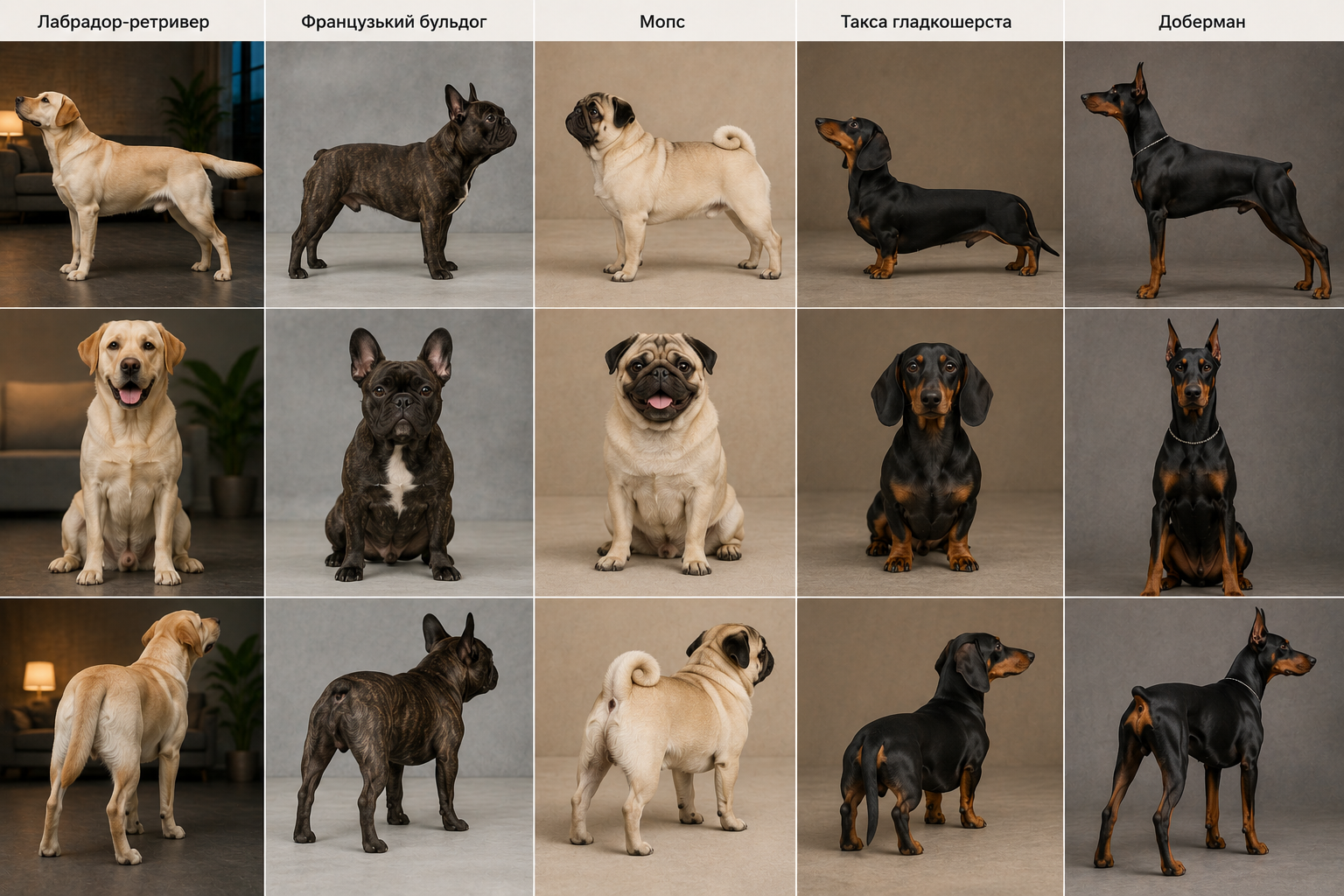
Many popular breeds have a short or smooth coat:
- Labrador Retriever;
- French and English Bulldog;
- Pug;
- Dachshund;
- Doberman;
- Boxer;
- Beagle;
- Dalmatian;
- Rottweiler;
- short-haired Chihuahua and many others.
Every breed has its own specifics, but one thing stays the same: a short coat still needs regular care.
Short coats shed too
One of the biggest mistakes is thinking short-haired dogs barely shed. In reality the coat renews constantly. Some breeds shed quite heavily, especially during seasonal coat change. Owners are sometimes surprised where all those tiny short hairs come from. Proper brushing helps here. The right brush removes dead hair before it ends up on the sofa, clothes or carpet.
Do you need to brush a smooth-coated dog?
Yes — but correctly. For short coats, use tools that match the coat type and condition. The main goal is to gently remove dead hair without irritating the skin. Brushing is especially useful during heavy shedding. Regular care helps:
- remove loose hair;
- keep the skin clean;
- improve how the coat looks;
- reduce hair around the home;
- get the dog used to grooming routines.
And while brushing, an owner may notice skin changes that were easy to miss before.
A smooth-coated dog usually doesn’t need a haircut
That’s one of the main differences. Most smooth-coated dogs don’t need regular coat clipping. There’s no point trying to make a short coat even shorter just because it seems cooler for the dog. The coat is a natural covering, so unnecessary cutting doesn’t make sense. Instead of haircuts, the focus is on brushing, bathing and hygiene care.
Bathing: when is it needed?
Smooth-coated dogs usually don’t need very frequent baths. Guide yourself by lifestyle and coat condition. If the dog walks a lot, plays outdoors a lot, or loves puddles, bathing may be needed more often. But regular doesn’t mean “the more often, the better”. Use products made for dogs and match them to your pet’s skin. After bathing, dry the coat well.
Why you shouldn’t use human shampoo
This is a common mistake. Dogs’ skin is different, so human products aren’t ideal for regular pet care. Better use animal-specific products chosen for coat type and skin condition. And if the dog has skin issues — itch, redness, flaking or other symptoms — cosmetics shouldn’t replace veterinary treatment.
Grooming is more than the coat
Even if a dog barely needs clipping, other important routines remain. Nails. Overgrown nails can interfere with walking and cause discomfort, so check them regularly and trim when needed.
Ears
Ears also need regular checks. This matters especially for dogs with hanging ears, where moisture and dirt can build up. Don’t over-clean or use products without a reason.
Paws
Paws contact ground, asphalt, sand and other surfaces every day. After walks, check them — especially between the toes and on the pads.
Teeth
Oral hygiene is also part of overall dog care. Regular brushing with dog-safe products helps keep teeth in better condition.
Grooming helps you watch the skin
On a short coat, skin changes can be easier to spot. During regular care you may notice:
- redness;
- dryness;
- flaking;
- unusual spots;
- scratches;
- insect bites;
- swelling;
- excessive hair loss.
Of course a groomer doesn’t replace a vet. But regular contact and careful care help you notice changes sooner.
Does a smooth-coated dog need professional grooming?
Yes — but the format differs from long-coated breeds. For a smooth-coated dog, professional care may include: brushing; bathing; thorough drying; hygiene care; nail trimming; paw care; checking and gently cleaning ears when needed. So a dog doesn’t have to be clipped to get a professional groom.
What does professional brushing give you?
During shedding, a home brush is sometimes not enough. A professional groomer can choose the right tool for that coat and work through it systematically. This matters especially for heavy shedders. After a proper session the coat looks cleaner and neater, and the amount of dead hair drops a lot.
Can you fully care for a smooth-coated dog at home?
Yes — and you should. Professional grooming doesn’t replace home care. An owner should regularly:
- check the skin;
- brush the coat;
- watch nail length;
- keep paws clean;
- check the ears;
- maintain oral hygiene.
And a professional groomer helps with full care and the tasks that need the right tools and experience.
Why “but the coat is short” isn’t an argument
Because the coat is only part of the dog. Even a smooth-coated pet has skin, nails, paws, ears, teeth and other areas that need attention. Grooming is not a synonym for “haircut”. Grooming is full pet care. That’s why it’s needed not only for a Poodle, Yorkie or Shih Tzu. It’s also needed for that Labrador who happily brings half a kilo of sand home after a walk.
A final word
A smooth-coated dog is not a “no-grooming” dog. The care is simply different. They don’t need a complex haircut, but they do need regular brushing, proper bathing, nail and paw care, ear checks and attention to skin condition. And most of all — don’t wait until a problem becomes obvious. Regular care is always easier than fixing neglected coat or hygiene issues. At Star Grooming we work not only with fluffy and long-coated breeds. Smooth-coated dogs also deserve professional care, comfort and attention.